Tips On Tube Bending!
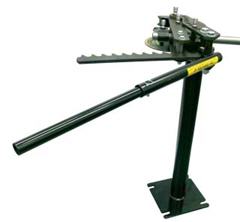
Building a custom frame requires tube bending. Obviously, a tube bender is a necessary tool to have in your shop.
This short but succinct article outlines one of 9 problems that occur during the chopper frame building process.
It was taken from our new course titled '9 Common Problems Metalworkers Face When Building A Chopper Frame And How To Overcome Them!'
Problem #3: What Is The Best Way To Bend Tubing?
Answer: First of all the best way to bend tubing is to use a 'tubing bender'. Heating and bending tubing for structural sections of a frame is not recommended.
Heating any metal physically changes the molecular structure and many times modifies the strength and brittleness.
Getting the right temperature is the key to not distorting the 'inner' strength of any tube. Where to heat and the direction to bend are additional variable when working with compound bends and seamed tubing.
If you are unsure of proper temps, bend directions, and angles, a bending machine or mandrel tubing bender is the best way to go. Simple bends rarely interfere with the strength integrity of the material while retaining very good accuracy.
There is really no need for a computer controlled, hydraulic mandrel bender unless you are looking to get into production work.
What Is The Best Tube Bender?
Stay away for inexpensive pipe benders - the dies will not fit tubing and the benders themselves are usually not heavy duty enough for any quality work. There are many quality manual tubing benders available for not much money.
For a good quality tubing bender try JD Squared (they are based out of Ocala, Florida), but you can get one on Ebay.
Related Articles:
Tubing Bender
DOM Tubing and Motorcycle Frame Tubing: What To Use.
Recommended:
Build Your Own Tube Bender With This 40 Page Guide -- Tube Bender Plans.